
The Author’s Guide to eBook Formats: Fixed-Layout vs. Reflowable
Choosing the right eBook format is a critical decision that affects both the reader's experience and the book's distribution potential. For many authors at Journey Bound Publishing, the choice between fixed-layout and reflowable (standard) formats depends entirely on the marriage of content and design.
Here is a breakdown to help you decide which path fits your project.
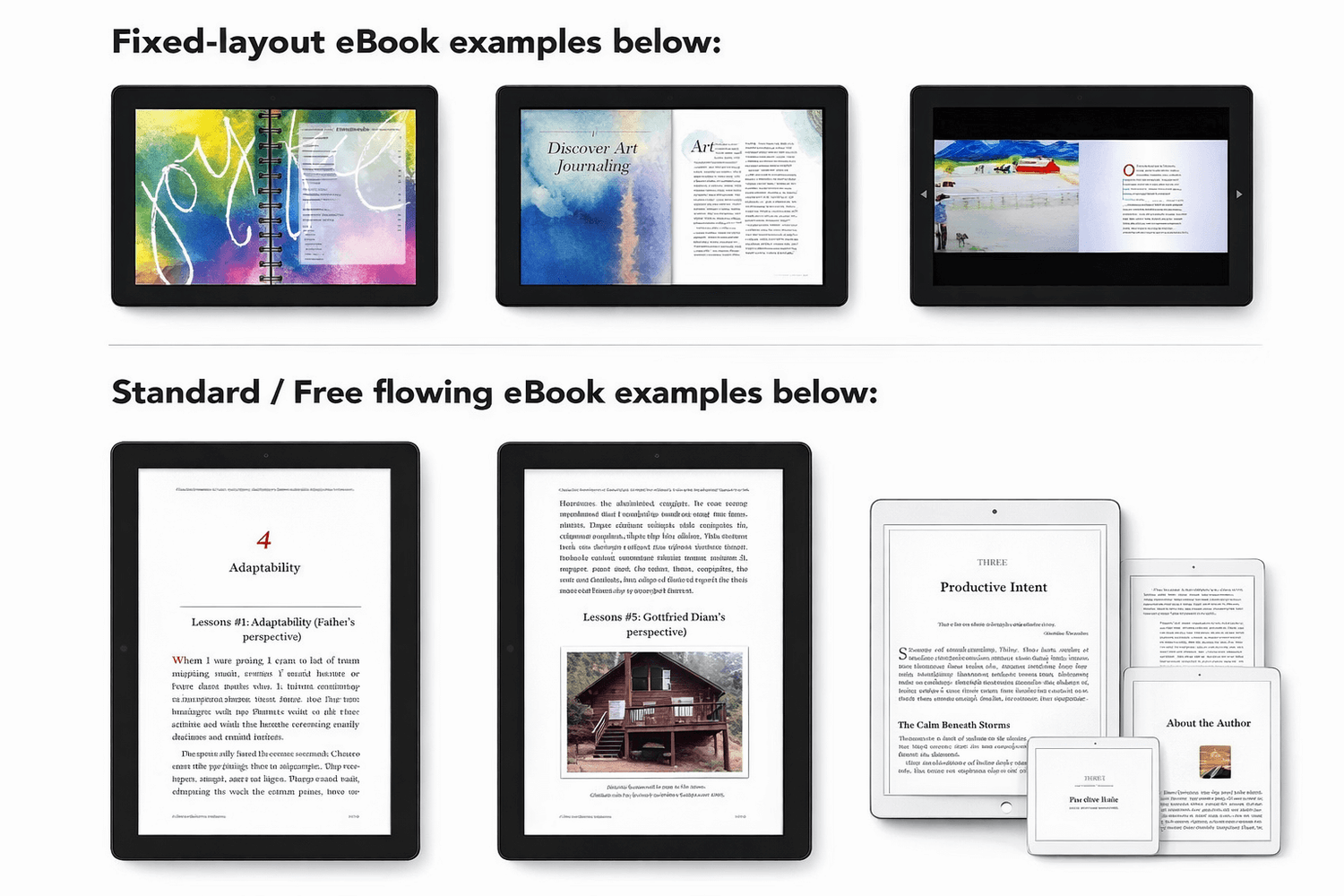
Standard Reflowable eBooks
This is the industry standard for most books. In a reflowable eBook, the text is fluid. Readers can change the font size, typeface, and line spacing to suit their preferences. The content "flows" to fit the screen size of the device, whether it is a Kindle, a tablet, or a smartphone.
Best For:
Fiction and Non-Fiction: Novels, memoirs, and business books.
Text-Heavy Content: Books where the narrative is the priority.
Maximum Compatibility: These files work across almost every e-reader and platform.
Pros and Cons:
The primary benefit is accessibility. Because the reader controls the display settings, your book remains readable for those who need larger text. However, you lose control over exact page breaks and the precise placement of images. If your design relies on a specific image sitting next to a specific paragraph, a reflowable format might shift those elements apart.
Fixed-Layout eBooks
A fixed-layout eBook acts much like a digital PDF. The design is locked in place. If you have a beautiful two-page spread or a complex layout with overlapping text and images, that design remains identical regardless of the device.
Best For:
Children’s Picture Books: Where illustrations and text must interact perfectly.
Cookbooks and Coffee Table Books: Where the visual aesthetic is as important as the information.
Technical Manuals: Books with complex charts, tables, or annotations that cannot be broken up.
Pros and Cons:
You maintain total creative control over the visual brand of the book. The downside is functionality. Readers cannot change the font size. On a smaller smartphone screen, a fixed-layout book often requires the reader to pinch and zoom to read the text, which can be a frustrating user experience. Additionally, some older e-ink devices do not support this format well.
How to Decide
To make the right choice for your long term strategy, ask yourself one question. Does the meaning of my content depend on the specific visual arrangement of the page?
If the answer is no, go with Reflowable. It is easier to distribute, cheaper to produce, and provides the best experience for the majority of eBook readers.
If the answer is yes, Fixed-Layout is your solution. Just keep in mind that you are prioritizing design integrity over device flexibility.
Latest Blog Posts:
Browse Categories
Want to Discuss Your Book? Ready to Publish or Bring New Life to an Old Title?
Subscribe now.
Stay up-to-date on the latest self-publishing industry news, announcements from platforms like Amazon KDP/IngramSpark, and marketing tips. Get exclusive content and discounts on our products and services.
CATEGORIES
© 2009–2026 Journey Bound Publishing. A YellowStudios LLC Company. All rights reserved.